How Dock Levellers Reduce Loading and Unloading Time
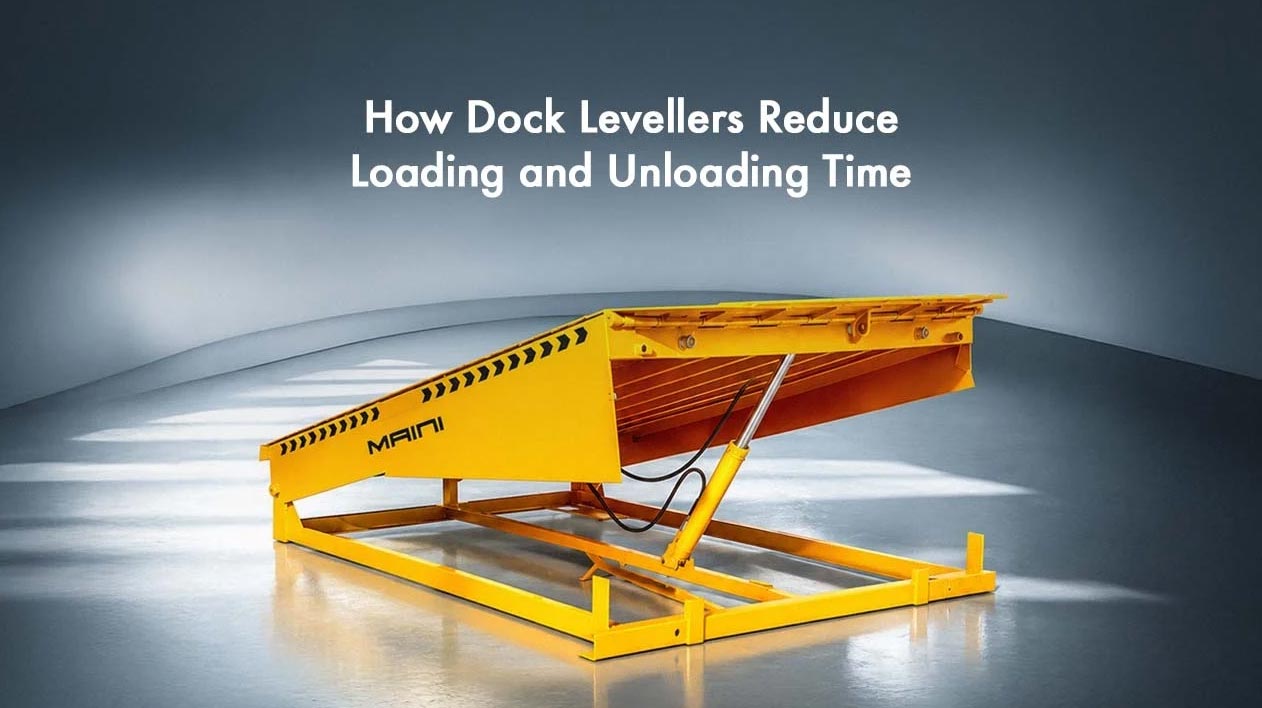
Why does one warehouse load a truck in ten minutes while another takes forty? Often the real answer is the space between a truck bed and a loading dock, and a dock leveller is the piece of equipment designed to close that space.
A dock leveller is a hinged platform that bridges the height difference between a loading dock and the bed of a parked vehicle. It gives material handling equipment such as forklifts and pallet trucks a suitable transition to cross. It does not replace proper vehicle positioning, safe operation, or setting the platform to the truck bed height before any load moves. Used that way, it removes a surprising number of delays from a normal loading day.
Why a Hydraulic Dock Leveller Cuts Down Waiting Time at the Dock
A hydraulic dock leveller uses a hydraulic system to raise, lower, and hold the platform in place, which gives smoother, more controlled movement than adjusting a platform by hand. Once the lip and platform settle against the truck bed, a forklift can cross without waiting for the surface to catch up.
Our own dock levellers are built around a hydraulic power pack, with a lip that extends onto the truck bed so the transition from dock to truck stays continuous rather than stepped. The working range varies by model, so it should be matched to the truck bed heights your dock actually receives.
Capacity matters just as much as speed. Our range runs from a dynamic capacity of 6,000 kg up to 15,000 kg, with platform width fixed at 2,000 mm and length varying from 2,500 mm up to 3,000 mm depending on the model, sized for common dock openings.
What a Warehouse Loading Dock Leveller Actually Needs to Handle
A warehouse loading dock leveller has to cope with more than just one truck height. Delivery vehicles vary, and a leveller that only works for one specific bed height ends up being a bottleneck for everything else. Each model has a working range, which is the span of truck bed heights it can serve, so match that range to the lowest and the highest truck beds your dock receives.
That is where pit dimensions and platform length come into play. Our pit lengths range from 2,580 mm to 3,080 mm, with a fixed width of 2,050 mm, matched to the platform size. If the pit is built to the wrong dimensions, the leveller may not sit flush, and this introduces exactly the type of gap and delay the equipment is designed to remove.
How a Dock Leveller Fits Into a Wider Setup of Material Handling Equipment
A dock leveller rarely works alone. It links the truck and the warehouse floor, within a chain of material handling equipment that includes forklifts, pallet trucks and stackers. If the leveller is the bottleneck, everything behind it slows down too, no matter how efficient the rest of the equipment is.
The same is true of a fleet of material handling vehicles on a busy dock. One leveller that keeps up with them means less idle time for every vehicle in that chain, not just the ones that cross the dock directly. A high-traction anti-slip surface also helps keep forklifts and loads stable while crossing.
What Drives Dock Leveller Price
The price of a dock leveller does not come down to one flat figure but is affected by a handful of specific factors. Dynamic capacity is the heaviest load the leveller can take while a loaded forklift or pallet truck is driving across it. UDL, short for uniformly distributed load, is the weight the platform can carry when the goods are spread evenly across it and are not moving. The other factors are platform length and lip length. The power pack is rated at one horsepower on every variant, so it does not change the price.
A site handling heavier loads typically requires a higher capacity unit, toward the 15,000 kg end of the range, which raises the cost. Compare specifications such as capacity and working range with your daily loading pattern, and check pit dimensions against your existing dock. An undersized or mismatched unit can cost more in downtime than it saves at purchase.
To get the dock leveler price for your site, share your dock size and daily truck traffic with us at sales@maini.com or on 1800 570 7655, and we will send a quote for the right model.
Choosing the Right Dock Leveller for Your Site
Dock levellers from Maini Materials Movement Pvt. Ltd. are built for heavy-duty use, with dynamic capacities of up to 15,000 kg, UDL capacities of up to 32,000 kg on our largest model, platform lengths of up to 3,000 mm and a hydraulic power pack for smooth, controlled lifting and levelling. Our anti-slip surface and rugged steel construction are designed to withstand harsh industrial conditions and are built to keep maintenance low.
If you are looking to reduce loading and unloading time at your facility, our team can help you match the right dock leveller and material handling equipment to your site's truck traffic, dock openings and pit dimensions. You can reach us at sales@maini.com or on +919591046004
FAQs
How Does a Dock Leveller Affect Loading Time?
It allows forklifts to drive straight across the gap between dock and truck bed, rather than stopping and readjusting at every load. A hydraulic model lets the platform rest against the truck bed with minimal manual effort. This takes away the small delays which add up when equipment has to slow down at the edge of the dock through a full day of loading.
What Is the Difference Between a Hydraulic Dock Leveller and a Mechanical One?
A hydraulic dock leveller uses a powered hydraulic system to raise, lower and hold the platform, which gives faster, more controlled movement with less manual effort. A mechanical version generally relies on manual release mechanisms and physical force to adjust, which can slow things down at a busy dock. For sites with frequent truck traffic, the smoother action of a hydraulic model tends to matter more over a full working day.
What Capacity Dock Leveller Does a Busy Warehouse Require?
Choose the capacity by the heaviest loaded forklift or pallet truck that will cross the platform. Our range runs from 6,000 kg to 15,000 kg dynamic capacity. Dynamic capacity covers loads moving across the platform, and UDL covers loads spread evenly on it at rest, so pick the model by your actual load, handling equipment, and loading conditions against our rated capacity.
Why Does Dock Leveller Price Vary So Much Between Models?
Price is shaped by dynamic and UDL capacity, platform length, and lip length, which change from model to model. A smaller platform sized for lighter loads costs less than a longer one built for heavier loads. The 1 HP power pack is the same on every variant, so it does not change the price. To get a quote, share your dock size and daily truck traffic with us, and we will suggest the right model.
How Does a Dock Leveller Work With Other Material Handling Vehicles?
It sits between the warehouse floor and the truck bed, so forklifts and pallet trucks can move loads across without stopping at a height mismatch. If the leveller cannot keep pace with the vehicles using it, it becomes the slowest point in an otherwise efficient chain. Matching leveller capacity and platform size to the vehicles already on site keeps the whole loading process moving at one consistent pace.
____________________________________________________________________________
Explore Our Latest Blogs
Top 9 Benefits of Electric Golf Carts for Commercial Use
Maintenance Tips to Extend the Life of Battery Operated Pallet Trucks