How to Choose the Right Electric Buggy for Your Business
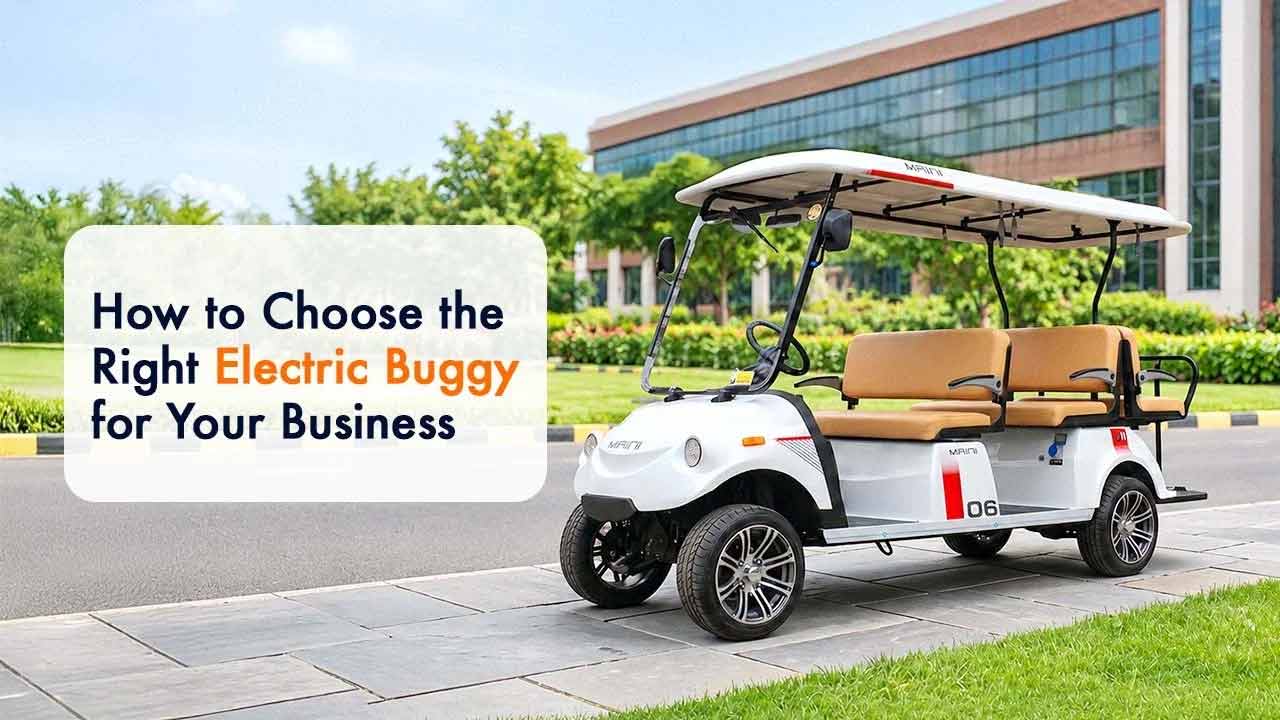
An electric buggy is a battery-powered passenger vehicle that carries people over short distances inside a fixed area. A diesel buggy does the same job with an engine, so it needs fuel and regular engine servicing.
The wrong electric buggy for a site is a money pit each and every day with slow trips, empty seats or a battery that conks out before the end of the shift. Imagine a 60 room resort in Goa, who buys a 4 seater because it looks smart in the brochure. By the first busy weekend, families of six are lined up outside the lobby, because they don’t fit.
That small mistake is easy to avoid when you ask the right questions before buying one.
Where Will You Use It?
Start with the place, because it decides almost everything else. A resort moves guests and light luggage, a factory campus moves staff between buildings, and a hospital moves patients and visitors along covered driveways.
Of the three the airport buggy is the toughest brief. It does involve frequent trips through busy terminals, so quick maneuverability and safety are more important than soft seats. The resort buggy is the other way round, guests notice comfort and looks first.
Which Electric Buggy Seating Size Fits Your Site?
Seating is the simplest choice to get right, as long as you plan for your average group and not the busiest day of the year. Our Maini Buggy range comes in 4, 6, 8, 11 and 14 seats, so most sites find a close match.
If a few big groups arrive only now and then, it is usually cheaper to run two smaller buggies than one large one. That way the vehicle you use all day is not oversized for the trips you make most often.
Which Battery Suits Your Day?
An electric buggy comes with lead-acid or lithium-ion batteries, and your daily routine should make the choice. Lithium-ion usually charges faster and lasts longer, which helps if the buggy runs long hours or across several shifts. Lead-acid is a familiar and simpler option for lighter use.
Before you make up your mind, consider the hours the buggy runs, the distance it covers, the number of trips it takes. Then ask the supplier in writing for the range per charge and the time it takes to charge so you are comparing real numbers and not promises. Our 4-seater can go at a maximum of 18 kmph which is good for slow movement inside a campus and not for long distance travel.
Which Safety Features Matter Most?
A commercial electric buggy carries guests, patients and staff, so safety belongs at the top of your list and not in the extras. Additional safety accessories may include seat belts, an emergency stop, a reverse buzzer and a safety beacon. Confirm which accessories are required for your application.
Slopes need one more inspection. If you start the buggy on a slope, a hill holder, which works with the electromagnetic braking system, keeps it from rolling backward. Availability can depend on the configuration, so confirm it for the buggy you are considering.
What Should You Ask an Electric Buggy Manufacturer?
A buggy is a long-term purchase, so the electric buggy manufacturer matters as much as the vehicle. Ask who handles servicing and spare parts after the sale, because a buggy that waits weeks for a part earns nothing. Ask whether seating can be configured to your site, and which safety features come as standard and which cost extra.
Experience across different sectors helps too. A maker who has supplied hotels, airports, hospitals and campuses understands how the same buggy must behave very differently in each. We have served all of these for over a decade, and our Maini Care team supports buyers after delivery.
How Do You Make the Final Choice?
The right electric passenger buggy is the one that matches your seating needs, battery routine and safety needs, and not the one with the best photograph. When those three line up, the buggy simply works, day after day, without drama.
If you are comparing options for your site, talk to our team about the right electric buggy configuration for your needs, and we will help you pick the seating and battery that suit your daily routine.
FAQs
How many seats does an airport buggy need?
It depends on how many passengers move together at one time. A 6-seater suits families and small groups with luggage, while 8, 11 or 14-seaters suit busy terminals that move larger groups. Check your busiest hour as well as your average, because a buggy that is too small creates queues exactly when the terminal is most crowded.
Is lithium-ion always the better battery for an electric buggy?
Not in the least. Lithium-ion batteries generally charge faster and last longer, making them a good fit for buggies that operate for long hours or multiple shifts a day. Lead-acid batteries are much simpler and still good enough for lighter use, like a few short trips on a small campus. Check your running hours and budget before you make your decision, and get the charging time in writing.
Can one buggy suit both a hotel and a hospital?
A buggy can do either one if it has the right seating and safety features, but each site has its own needs. A hotel needs comfort, space for luggage, and appearance; a hospital needs smooth starts, stability and safe boarding for patients. Tell your supplier your route, slope and group size and they will advise you on the right configuration for each.
Does a buggy need regular servicing?
Yes. Like any vehicle, a buggy stays safe and reliable when it is checked on a schedule, including the brakes, tyres and battery. Servicing at fixed intervals also helps you catch small problems before they cause downtime, so ask your supplier how service visits and spare parts are handled.
Explore Our latest Blogs
Battery Operated Stacker: 6 Things to Check Before You Buy
Top 9 Benefits of Electric Golf Carts for Commercial Use
Maintenance Tips to Extend the Life of Battery Operated Pallet Trucks