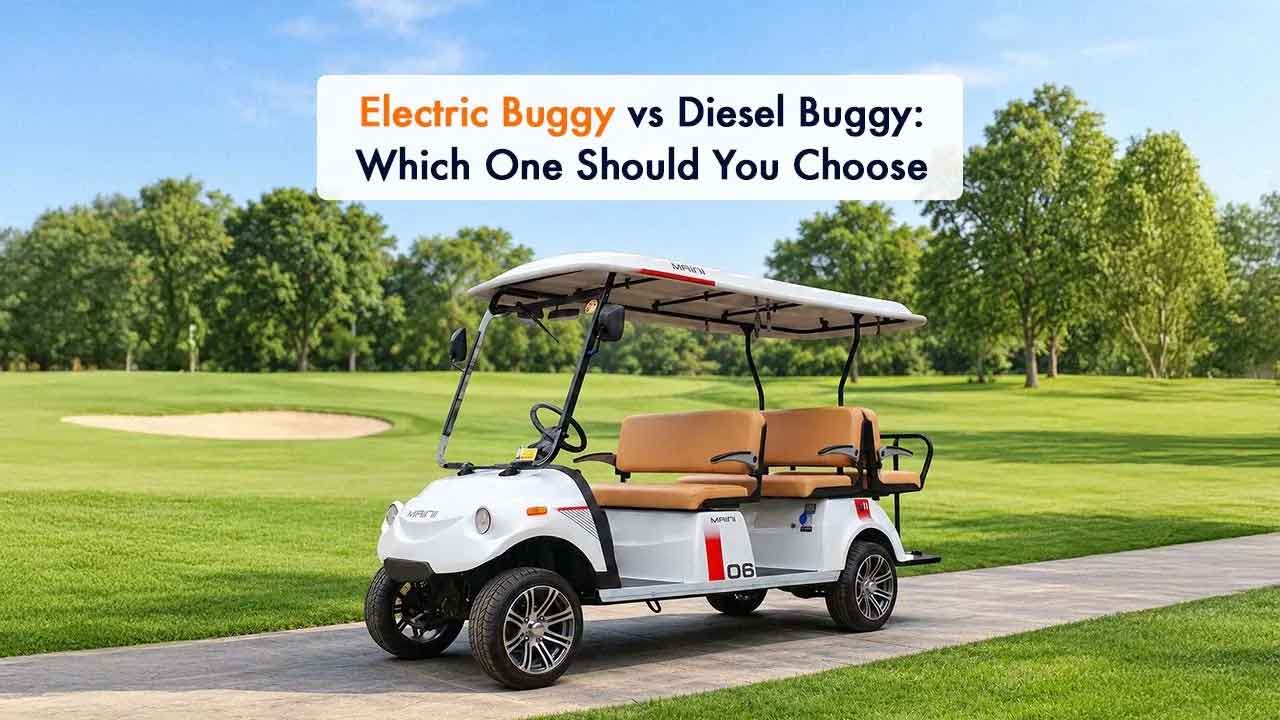
Electric Buggy vs Diesel Buggy: Which One Should You Choose?
An electric buggy is a battery-powered passenger vehicle used for short-distance travel within a campus. A diesel buggy is the same type of vehicle powered by a diesel engine instead. When a vehicle runs for several hours a day, fuel or charging costs, maintenance and everyday use all add up.
That is why choosing between an electric buggy and a diesel buggy requires more than comparing their purchase prices. Electric models offer quiet operation and no tailpipe emissions, while diesel models can be useful where charging facilities are not readily available.
Electric Buggy vs Diesel Buggy Comparison
What Are the Electric Buggy Benefits?
Electric buggies are a practical option for places where vehicles regularly cover short distances and return to the same location.
They are commonly used in:
- Hotels and resorts
- Airports
- Hospitals
- Educational campuses
- Factories
- IT parks
- Residential and commercial developments
- Parks and other large public spaces
One of the biggest electric buggy benefits is quiet operation. This can make a difference when the vehicle is being used around guests, patients, visitors or employees.
Electric buggies also produce no tailpipe emissions during operation. For campuses and areas where people move around on foot, this can be an important consideration.
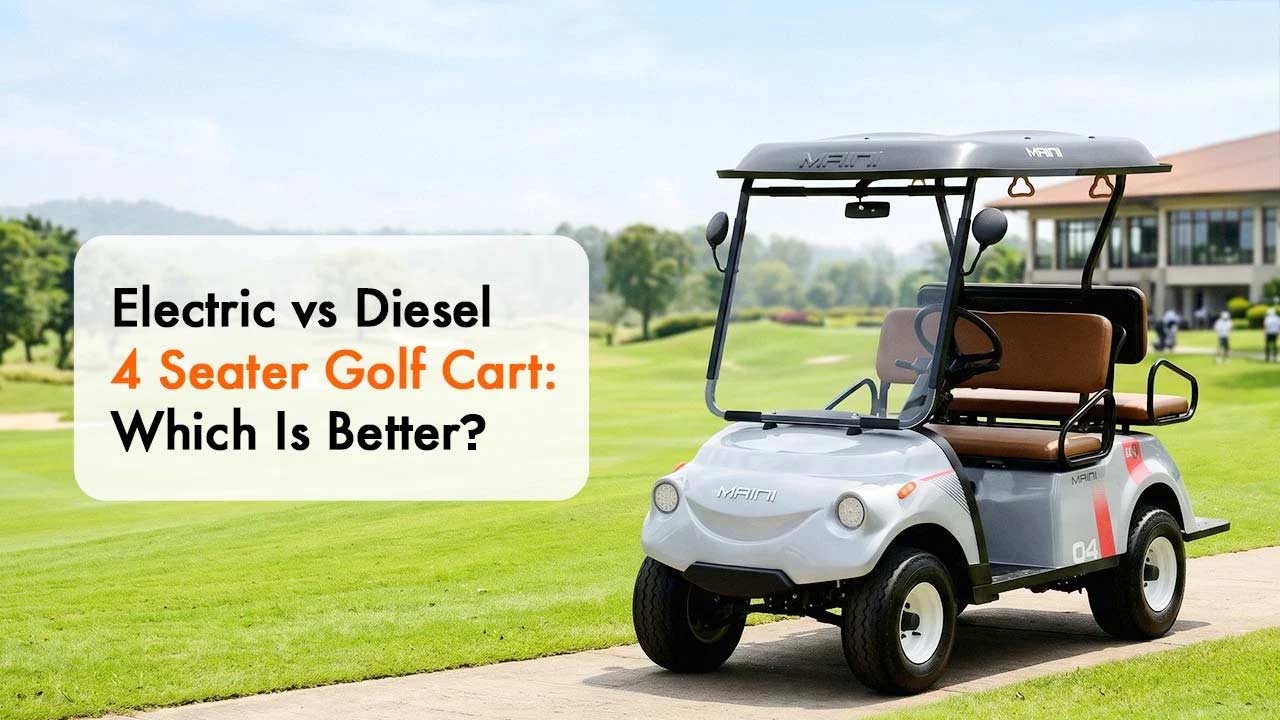
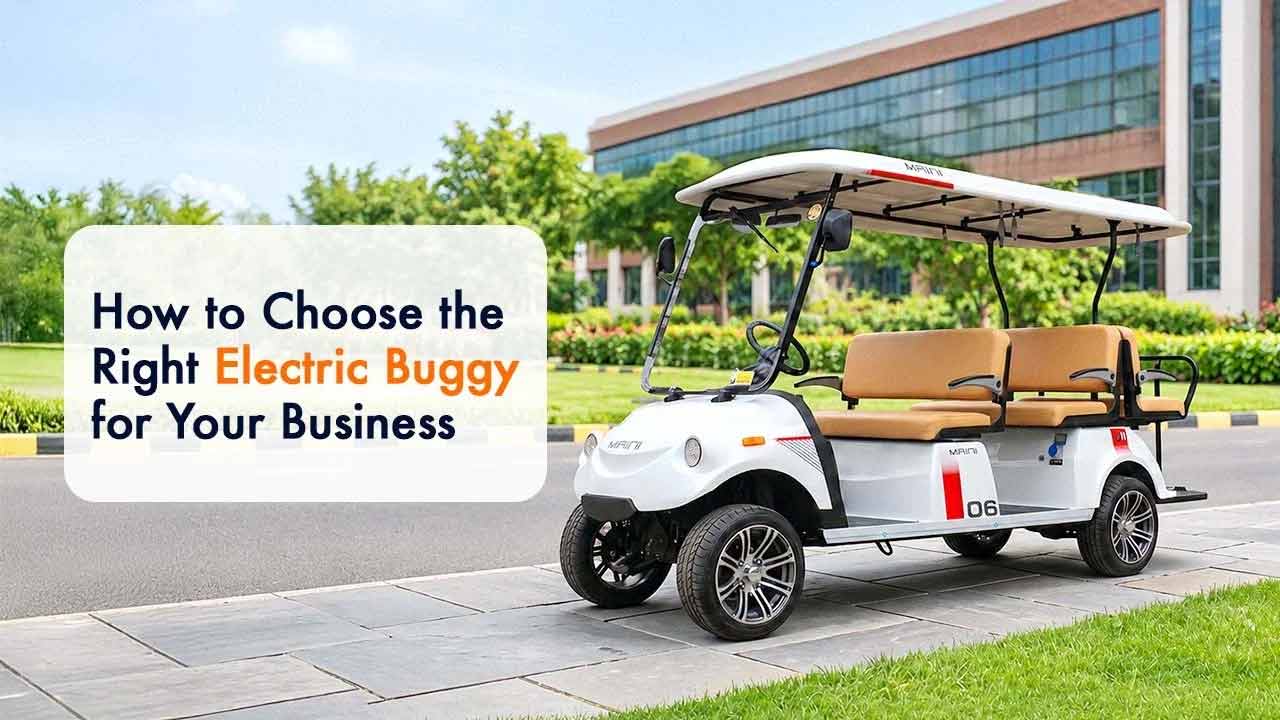
Maini Materials Movement has been operational since 1984 and entered the buggy business in 2002 with the launch of the Maini Buggy for in-campus mobility. Since then, its buggies have been used across different applications across India. Maini Buggies run at a top speed of around 18 kmph, which suits short, controlled trips within a campus rather than open-road travel. The range includes 4, 6, 8, 11 and 14-seater configurations, while the M11 Plus is available with a Li-ion variant. Battery choice can be matched to how the buggy will be used, including factors such as operating hours, distance covered, and the number of trips made each day.
What Are the Diesel Buggy Benefits?
Diesel buggies can still make sense for certain applications. They can be particularly useful when charging a vehicle regularly is difficult or when the buggy needs to spend long periods away from a fixed location.
Some of the main diesel buggy benefits include:
- Quick refuelling
- No need for charging infrastructure
- Suitable for locations where electricity access is limited
- Useful for longer periods of operation away from a fixed base
However, diesel vehicles also come with regular fuel costs, engine maintenance and exhaust emissions.
For a large campus where the buggy can return to a fixed charging point, an electric model may be more convenient. For locations where charging is difficult, a diesel model may be the more practical option.
Electric Buggy vs Diesel Buggy: Which Has Lower Running Costs?
The purchase price is only one part of the cost. A diesel buggy comes with ongoing fuel and engine maintenance costs, while an electric buggy mainly requires charging and routine maintenance.
For example, consider a buggy used regularly to move guests, staff or materials around a large facility. A diesel buggy will need fuel each time it is used, along with regular engine-related servicing. An electric buggy, on the other hand, can be charged between shifts and generally has fewer engine components that need routine maintenance.
For businesses, it makes sense to look at the overall cost of running the buggy, rather than just the price you pay at the time of purchase.
Is an Electric Buggy Suitable for Hotels, Hospitals, and Airports?
For many hotels, hospitals and airports, an electric buggy can be a good fit because these vehicles are often used for short-distance passenger movement within a defined area.
For example, a hotel may use buggies to move guests between rooms, parking areas and common facilities. An airport may use them to transport passengers across terminals or other airport areas. Hospitals and large campuses may use them to move visitors, staff and patients around the premises.
An electric buggy can be a good choice when:
- The buggy will mainly be used to move people around the campus rather than to travel long distances.
- You have a convenient place where the buggy can be charged between trips or at the end of the day.
- You want a quieter vehicle that can be used around guests, visitors, patients or employees without adding much noise.
- The buggy will usually return to the same location, making it easier to manage charging as part of the daily routine.
- You want to reduce exhaust emissions from vehicles operating within the campus.
Maini Materials Movement's Maini Buggy range is available for applications including airports, hotels and resorts, hospitals, educational institutions, manufacturing facilities, and other large campuses.
A resort in Goa, for instance, replaced its diesel buggies with an electric fleet 2 years ago. Staff noted the buggies could run near guest pool areas and restaurants without disturbing anyone, and the maintenance routine became simpler with fewer moving parts to service regularly.
What Should You Know About Electric Buggy Batteries and Charging?
Battery choice is an important part of selecting an electric buggy. The right option depends on how the vehicle will be used.
Before choosing a model, consider:
- How many hours will it be running on a typical day?
- How much distance will it need to cover during the day?
- How many people will usually be travelling in it?
- Will it need to go up slopes or move across uneven ground?
- How often will you be able to charge it between trips?
- Where can you set up a convenient charging point?
Maini Materials Movement offers Maini Buggies with both lead-acid and lithium-ion battery options. The company also launched its lithium-powered vehicles in 2021.
Lithium-ion batteries generally offer faster charging and a longer working life than lead-acid batteries, though exact range and charging time will depend on the specific battery capacity chosen and how the buggy is used day-to-day. The best battery option will depend on your daily requirements, rather than simply choosing the newest technology.
How Do You Choose Between an Electric Buggy and a Diesel Buggy?
There is no single answer for every business. Start by looking at how you will use the buggy.
Ask yourself:
- How many people will usually travel in the buggy at one time?
- How many hours do you expect to use it on a normal day?
- How much distance will it need to cover during the day?
- Will it be used on slopes, uneven ground or mostly flat surfaces?
- Will the buggy have regular access to a charging point?
- Would a quieter vehicle make a difference at your location?
- Will the buggy need to travel away from the main campus for long periods?
- Would it be more practical for you to buy the buggy or rent one?
If the buggy will mainly operate within a hotel, hospital, airport or campus and can be charged regularly, an electric buggy is worth considering.
If charging is difficult and the vehicle needs to operate away from a fixed base for long periods, a diesel buggy may be more suitable.
Why Choose Maini Materials Movement for In-Campus Mobility?
Choosing the right buggy is not only about choosing between electric and diesel. The seating capacity, battery, application, and expected usage also need to match your requirements.
Maini Materials Movement has more than four decades of experience in material movement and in-campus mobility. Its Maini Buggy range includes 2, 4, 6, 8, 11 and 14-seater configurations, along with golf cart options, with battery choices suited to different applications.
Maini Materials Movement has sold more than 3,000 buggies and also offers buggy rental options, with more than 150 buggies currently on rental terms.
This gives businesses the flexibility to choose a buggy that meets their specific requirements, whether they are looking to buy or rent.
Choose the Right Buggy for Your Requirements
The electric buggy vs diesel buggy decision ultimately comes down to how and where you plan to use the vehicle.
Electric buggies are a strong option for many fixed-campus applications where quiet operation, day-to-day running costs and charging access matter. Diesel buggies can be useful where quick refuelling and operation away from a charging point are more important.
The best choice is the one that fits your daily operations, passenger requirements and available facilities.
Looking for the right buggy for your campus? Talk to the Maini Materials Movement team or get a quote to find the right configuration for your requirements.
FAQs
What is the main difference between an electric buggy and a diesel buggy?
An electric buggy runs on battery power, while a diesel buggy runs on diesel fuel. This one difference in power source shapes almost everything else about how the two vehicles are used: electric models run quieter and produce no exhaust, while diesel models refuel quickly but need regular engine upkeep and come with ongoing fuel costs.
Is an electric buggy suitable for full-day use?
Yes, depending on the battery, workload and charging arrangements. A buggy with a lithium-ion battery and access to a charging point between shifts can typically manage a full day's use, while heavier daily usage without a chance to top up may need a larger battery capacity or a spare battery on standby.
Are electric buggies more expensive to operate?
Not usually, though the answer depends on a few factors. Running costs come down to electricity prices, fuel prices, how often the buggy is used, and how it's maintained, so it's worth comparing the overall cost of running each option over months or years, rather than judging based on the purchase price alone.
Does Maini Materials Movement offer buggy rentals?
Yes, Maini Materials Movement offers Maini Buggy rental options in various seating configurations. This gives businesses the flexibility to trial a buggy or cover a short-term need without committing to a purchase, with over 150 buggies currently running on rental terms across different applications.
Explore our latest Blogs
Top Unique Features and Advantages of Maini Buggies